
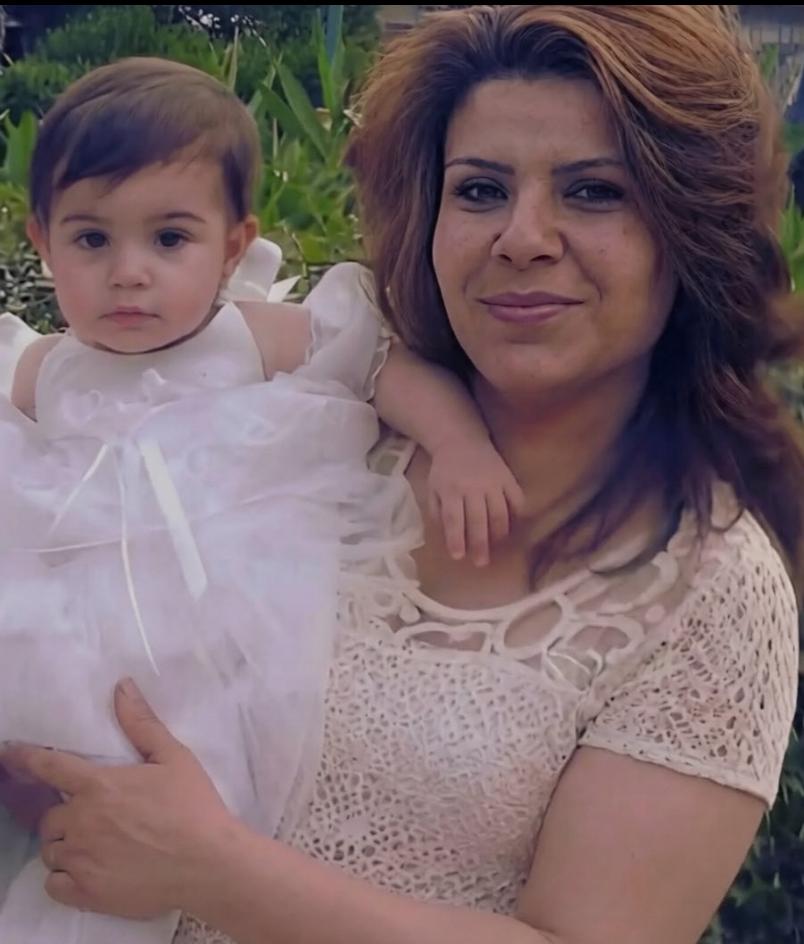
The recent tragedy in the Syrian city of Homs resonates far beyond an isolated incident. Christian teacher and mother Iman Georges was murdered by an armed man. According to her family, the local police chief stated after the attack: “Our man thought she was Alawite.” This single sentence starkly exposes a persistent and deeply rooted problem that has shaped Syria for years: violence arising from perceptions, assumptions, and identity-based classifications.
The murder of a teacher and a mother is not only a human tragedy of immeasurable magnitude — it is also a reflection of a profound societal crisis. When perceived identity becomes a justification for violence, the very foundation of a stable, law-based state is undermined. In a country navigating political transition and struggling to redefine its future, such developments are particularly alarming.
This incident does not stand alone. The events in Seydnaya and Qusayr have already illustrated how fragile the security situation remains in various regions. Symbolic provocations, armed attacks, and a pervasive climate of uncertainty have once again demonstrated that Syria continues to face structural tensions. The case of Iman Georges tragically fits into this broader pattern — serving as another indication that fear and instability still shape daily life for many citizens.
Syria’s political future, however, cannot be built upon insecurity and fear. A state seeking lasting stability must guarantee safety for all its citizens, irrespective of religious, social, or cultural background. The rule of law requires that individual lives are protected and not rendered vulnerable by subjective perceptions or ideological hostility.
Moments of political transition are decisive. They determine whether a nation moves toward equality before the law, institutional reliability, and social reconciliation — or remains trapped in cycles of mistrust and identity-driven tensions.
The murder of Iman Georges underscores that security challenges are not merely military or policing concerns. They are inseparable from the broader societal climate, political responsibility, and the capacity of state institutions to establish trust. Where citizens feel endangered because of perceived identity, sustainable peace cannot emerge.
In this context, the international community remains tasked with closely observing developments in Syria. Stability cannot be achieved solely through political agreements or institutional reforms; it depends fundamentally on the effective protection of human life and dignity.
Ultimately, Syria’s future hinges on whether it can foster a civic order in which violence is never legitimized through identity, but is unequivocally rejected through law, accountability, and justice. The tragic murder of Iman Georges stands as a painful reminder of how urgent and necessary this transformation remains.

