
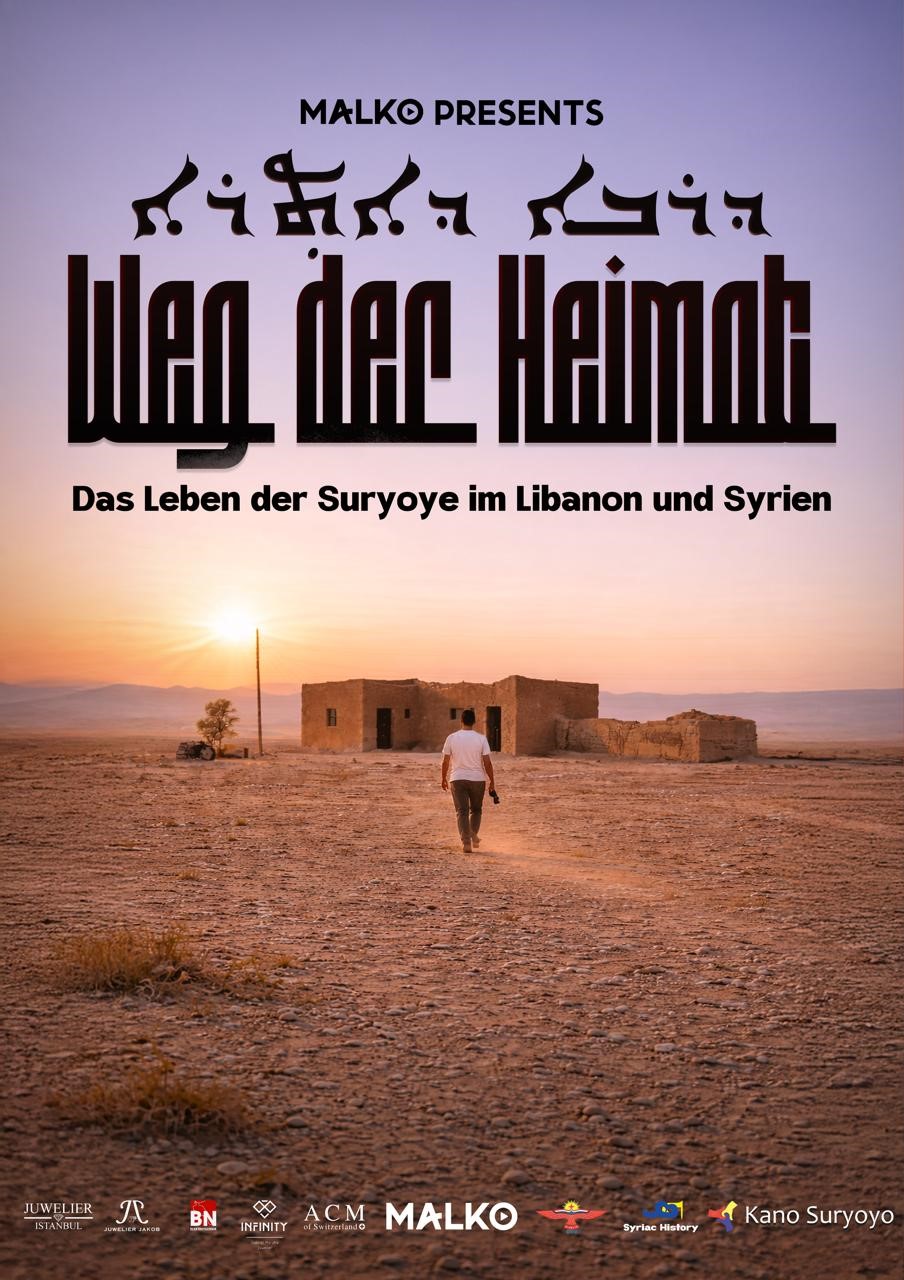
“The Way of Home” is a documentary (film) journey of a young man from the diaspora who travels to Lebanon and Syria to encounter the people, places, and voices connected to his own heritage. The film follows Eliya be Malke, who travels across both countries shortly before his own wedding and speaks with people on the ground about their lives and experiences. Rather than presenting a classic political analysis, the film offers a personal approach to the realities of the Christian Syriac communities in the region. Through encounters, everyday impressions, and conversations with different voices, the documentary unfolds in a cinematic style that feels closer to a feature film than to a traditional report.
Why “The Way of Home” resonates with young audiences
Many young people in Europe today have only an indirect connection to the countries of origin of their families. For young people with roots in Lebanon or Syria, this connection often exists mainly through stories told by parents, occasional family visits, or images presented in the media. At the same time, a generation is growing up that has been largely socialised in Europe and whose daily lives are shaped by European realities. It is precisely within this space between cultures that the film “The Way of Home” unfolds its particular impact.
The film resonates with young audiences largely because it is not a traditional political analysis. Instead of statistics, historical overviews, or complex geopolitical explanations, the film centres on a personal journey. Viewers accompany a young person from the diaspora who sets out to better understand his own heritage. This perspective is immediately relatable for many young people. They do not see a distant reporter, but someone from their own generation asking similar questions: Where do I come from? What does my heritage mean for me? And what responsibility do I have toward this history?
This personal narrative makes the topic far more accessible for younger audiences. Many of them rarely engage with the complex political situation in the Middle East in their everyday lives. Conflicts in Lebanon or Syria often seem distant and difficult to understand. The film builds a bridge between these worlds by presenting people, places, and everyday realities that otherwise remain abstract. As a result, an issue that might otherwise appear purely political or historical becomes personal and tangible.
Another important aspect is the role of heritage in shaping the identity of young people. Identity is not only formed by the place where someone lives, but also by history, culture, and family roots. For many young people in the diaspora, questions about these connections eventually arise. Understanding one’s origins helps individuals better understand themselves. Engaging with the history of one’s community creates orientation and strengthens a sense of belonging.
For young Syriacs in Europe in particular, this awareness carries special significance. Their history is marked by migration and loss, but also by remarkable cultural continuity. Language, traditions, and religious identity remain central elements of the community. When younger generations become familiar with these backgrounds, a stronger awareness of their role within this history often emerges. This is not only about the past, but also about responsibility for the future.
Films like “The Way of Home” can play an important role in this process. They communicate knowledge not only through facts, but through emotions and personal encounters. Young viewers see people of a similar age, hear their stories, and recognise parallels with their own lives. In this way, the film creates an engagement that goes beyond information alone.
Interest in one’s heritage is therefore more than a cultural detail. It is an important part of personal development. Those who understand their roots gain a clearer understanding of their past and can make more conscious decisions about their future. In a globalised world where identities are often complex and layered, this knowledge becomes a stable anchor.
For this reason, films like “The Way of Home” strike an important chord among young audiences. They connect personal stories with historical and social realities and open a space in which young people can begin to engage with their own heritage — not out of obligation, but out of genuine interest.